From monthly running costs such as fuel, the yearly MOT, service and other maintenance costs and larger necessities such as car insurance and road tax, we spend a lot on our vehicles each year.
But how much?
Well, based on internal survey data, we estimate that the average driver will spend £6,364 on their vehicle this year, averaging over £500 per month.
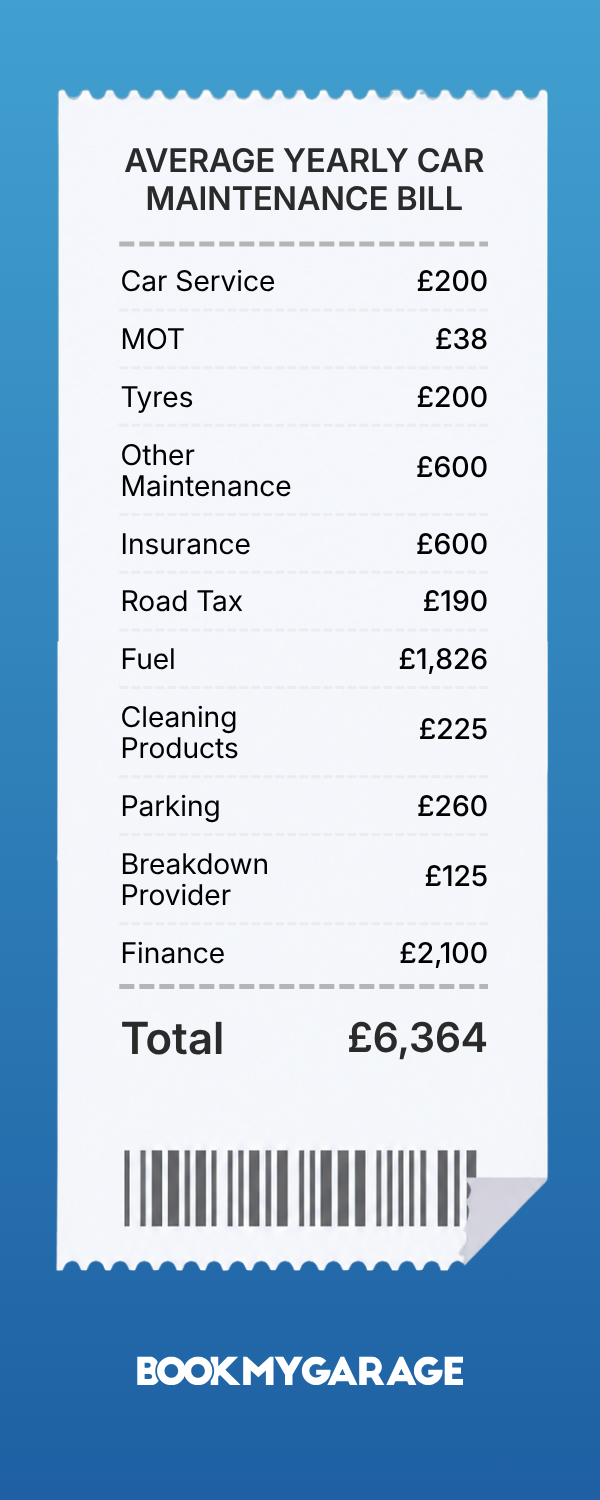
All correct as of April 2026. We have averaged data based on responses given in an internal BookMyGarage survey in April 2026 alongside live MOT, servicing and repair costs at garages on our platform. For representative purposes only. Actual yearly spend is likely to change depending on your vehicle.
How Much Does the Average Driver Spend on Their Car?
£200 a year on a service
£38 a year on an MOT
£200 a year on tyres
£600 a year on car insurance
£190 a year on road tax
£1,826 a year on fuel
£225 a year on cleaning products
£260 a year on parking
£125 a year on their breakdown provider
£2,100 a year on finance
Why Running Costs Will Vary by Driver
Every vehicle is different, and we’ve averaged running costs for big and small cars (as well as vans, hybrids and EVs) to create a blended average across common vehicle types and usage patterns.
It’s very likely that some drivers will pay more than £6,364 to run their vehicle this year, but also very likely that some drivers will pay less.
Factors that contribute to wild variations in running costs are:
Engine size
Frequency of maintenance
Number of car repairs needed
Monthly mileage
Your level of risk, as deemed by your insurer
Age of vehicle
Key Areas Where Costs Have Increased
As you might expect, fuel costs are expected to significantly increase running costs in 2026.
Based on the data from our internal survey, the average driver would have spent £73 on a tank of fuel in 2025. Based on average fuel prices in 2026 so far, that has risen to £76, as of April 2026.
And, with the average driver filling up twice a month, spending £3 more a tank would see them spend an extra £72 on fuel this year – without prices rising any further.
With fuel being more volatile than most other costs, there’s always the possibility of it increasing further.
You may also see higher insurance prices and more expensive servicing costs, especially later in the year.
While some costs haven’t really changed vs 2025 (such as vehicle tax or the base MOT price), many drivers are still feeling the pinch of those that have.
So, What Can You Actually Do to Reduce Your Running Costs?
If you’re worried about spending more on your car’s running costs in 2026, there are plenty of things you can do to take back some control of the overall bill.
Shop around to find the best deal on car insurance, fuel prices, parking costs or your yearly MOT, servicing & repairs
Cut other unnecessary expenses such as washing your car by hand rather than using a carwash
Drive more efficiently to reduce fuel consumption
Changing driving habits, consciously looking to get the best deal can help you overcome rising costs and minimise the amount your yearly running costs increase in 2026.





No comments yet
Leave a comment